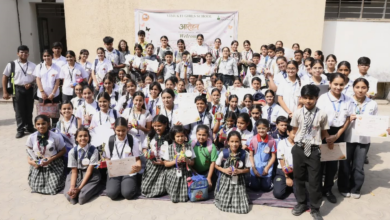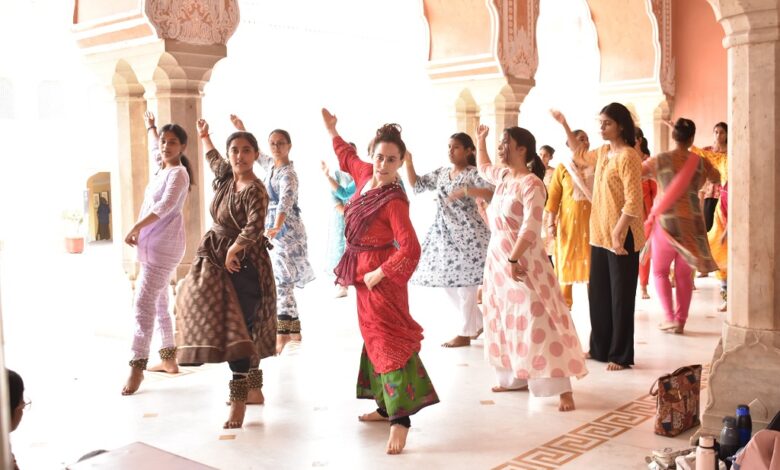
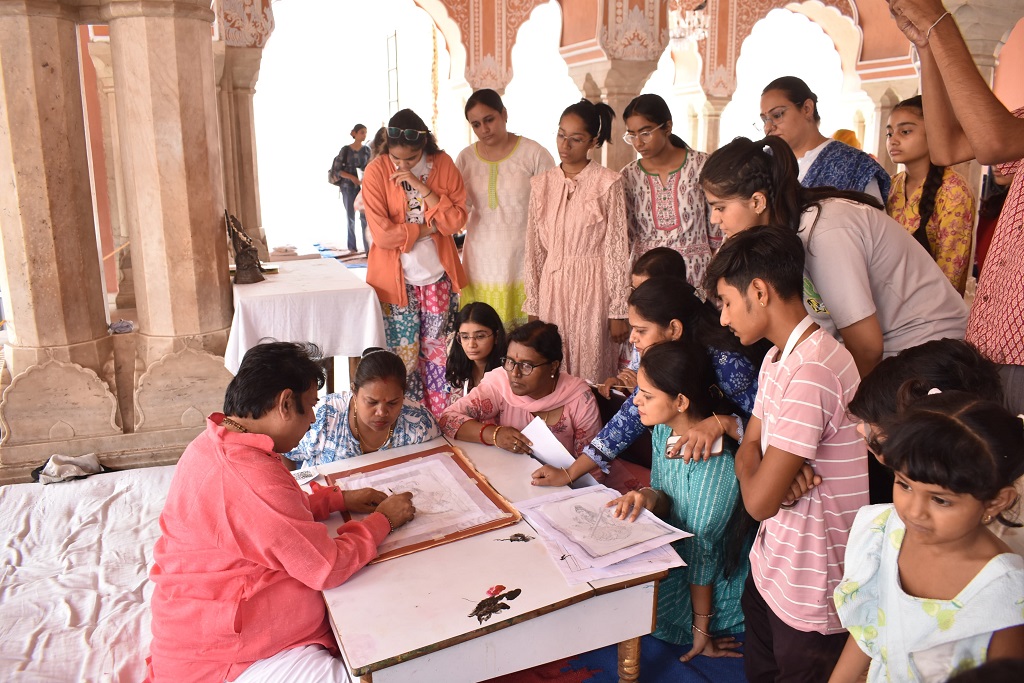
In the one-month cultural heritage training camp being organised by Maharaja Sawai Man Singh II Museum Trust in City Palace, Jaipur, participants are being introduced to the nuances of various traditional Indian arts. The aim of this camp is to introduce the young generation to India’s culture, rich art and craft and to preserve it. Participants of different age groups are participating in the camp and are being provided practical training in various traditional art forms by renowned art experts. This includes traditional painting, Ala-Gila, Araish, Dhrupad, Kathak, Flute, Calligraphy, Vedic astrology and Thikri (mirror work) art. This camp is being organised in collaboration with ‘Rangreet’, a representative organisation of traditional arts, and ‘Saraswati Kala Kendra’. The camp will conclude on 20 June.
The camp is being coordinated by Ramu Ramdev, who, along with Babulal Bharodiya, is teaching the participants the nuances of ‘traditional painting’ in the Dhundhar style. Ramu Ramdev shared that this camp stands as a testament to the Jaipur royal family’s enduring commitment to preserving and promoting traditional art and culture. Held annually at the City Palace for the past 28 years, the camp continues to draw participants from across the country. This year, artists and enthusiasts have gathered not only from Jaipur but also from states like Gujarat, Maharashtra, Delhi, Jammu & Kashmir, Chennai, and Madhya Pradesh to receive training in traditional art forms. Speaking about the focus on ‘traditional painting,’ he mentioned that participants are being introduced to the fundamentals of the craft, including techniques such as lining, brushing, and coloring.
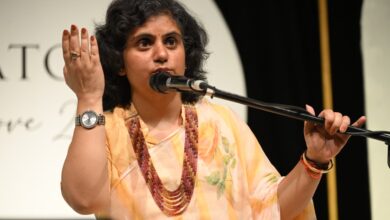
Dr. Jyoti Bharti Goswami is training participants in the classical dance forms of Kathak and folk dance, rooted in the pure tradition of the Jaipur Gharana. She shared that the training began with the foundational grammar of Kathak, focusing on rhythm, beats, expressions, and physical balance. As the sessions progressed, participants have been engaged in intensive practice of key elements such as mudras, intricate footwork, tode, tihai, anga-sanchalan, and pad-sanchalan. Meanwhile, Dr. Madhubhatt Tailang is guiding the participants in the Dhrupad style of the Jaipur Gharana. Her sessions focus on introducing the fundamental structure of Dhrupad singing, emphasizing the purity of raga and the intricacies of rhythm.
Dr. Nathulal Verma is training the participants in the technical nuances of traditional ‘Ala-Gila and Araish’ (fresco) style painting. On the other hand, R.D. Gaur is imparting the basic techniques of flute playing and understanding of ragas in classical music. Under the guidance of Lalit Sharma, practical training is being provided in calligraphy in both Hindi and English languages and the art of painting ‘Portrait’. Similarly, Dr. Brajmohan Khatri is introducing the participants to the principles and interpretation of ‘Vedic Astrology’. Apart from this, under the 15-day special session this year, Badri Narayan Kumawat is making the participants aware of the nuances of the traditional ‘Thikri’ (mirror work) art.