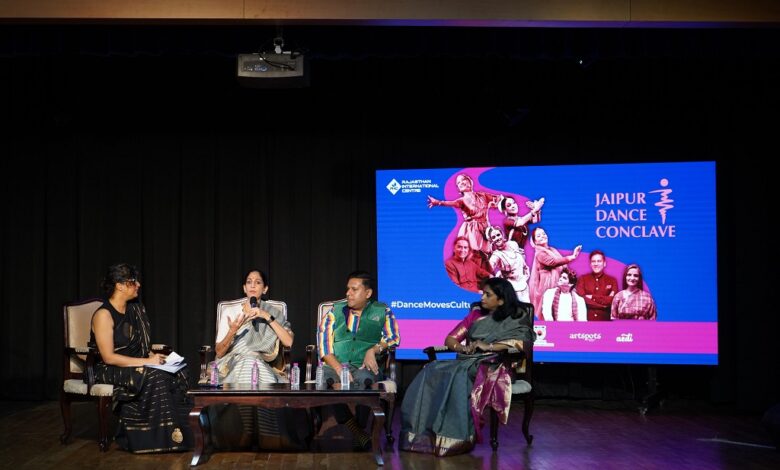
Jaipur Dance Conclave (JDC) began with great enthusiasm and energy at the Rajasthan International Centre. The first-of-its-kind dance conclave in Rajasthan is presenting an exciting array of dance performances, workshops and discussions. Through these activities, Jaipur audiences are being introduced to the depth and diversity of Indian dance traditions. This festival is an initiative of ArtsSpots and is supported by the Department of Tourism, Government of Rajasthan; Rajasthan Grameen Aajeevika Vikash Parishad (Rajeevika), Rural Development Department; and the Rajasthan International Centre. The event has been conceptualised and curated by Manjot Chawla and Kuchipudi dancer Amrita Lahiri.
*Insightful seminars on inclusive art forms and the art ecosystem*
The first day of the festival commenced with a lecture by renowned Bharatanatyam exponent and Padma Shri awardee Leela Samson. In her address, she highlighted the delicate relationship between dance scholars and practitioners. She explained that although both understand art through their respective perspectives, their ways of looking at technique, process and expression may differ. Speaking further on the importance of literature in dance, she emphasised that dance is not limited to body movements and music; rather, it becomes complete through many interconnected elements. Costumes and jewellery, stage lighting and one’s relationship with accompanying musicians — all these aspects play a vital role in enhancing the expressiveness of dance.
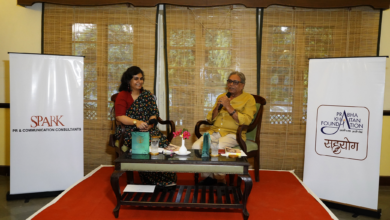
Following this, Leela Samson and literary consultant Mita Kapur engaged in an in-depth conversation on the theme *”Dance – The All-Inclusive Art Form”*, discussing the vastness, inclusivity and social role of dance. Samson noted that while dance continues to evolve and take on new forms, preserving its original essence is equally important. Reflecting on the past, she said that earlier gurus were more traditional and strict in their approach. Emphasising the discipline of the Gurukul tradition, she remarked that dance was not just an art form but a part of daily life — where learning, practice and respect for the guru were held in highest regard.
She also referred to dance vocabulary, ‘arangetram’ and the Devadasi tradition. She stressed that if we fail to preserve these foundational aspects and traditions of dance, it is possible that our generation may become the last to witness the art in its authentic form.
*Seminar on ‘The Arts Ecosystem – Dynamics and Balance’*
The second seminar focused on the theme “The Arts Ecosystem – Dynamics and Balance”, featuring panelists Deepthi Sasidharan, Shan Bhatnagar, Akhila Krishnamurty and Aditi Jaitly, who discussed the evolving ecosystem of the arts and the need for balance within it.
The discussion began with senior curator, Aditi Jaitly sharing her thoughts on the role of museums in shaping and advancing the arts ecosystem. She noted that new and innovative spaces are emerging today — spaces that not only preserve art but also enhance dialogue and connection between artists and audiences. She added that collaborations have become a significant trend, with each new collaboration enriching artistic expression.
Artist, Shan Bhatnagar emphasised the importance of preserving art forms and the spirit of ‘jugalbandi’ (creative synergy). He expressed concern that unlike crafts such as block printing or jewellery, several traditional art practices are no longer being pursued by younger generations. Many of these art forms are now on the verge of extinction. He stressed the need for patronage and societal support to save these endangered traditions. He also remarked that Jaipur is fortunate to have many patrons who are making constant efforts to keep these arts alive by offering platforms, respect and opportunities to artisans.
Art historian, Deepthi Sasidharan shed light on the role of museums, archives and libraries in preserving art. She explained that these institutions are not merely buildings but crucial pillars that safeguard cultural heritage. The preservation of dance as an art form is also made possible through such institutions, as they protect the stories and traditions associated with the art. She emphasised that increasing education and awareness is essential for the preservation of any art form. When people understand the significance, background and intricacies of art, they are better equipped to participate in its conservation. This session was moderated by arts entrepreneur Akhila Krishnamurty.
*Workshops and diverse dance presentations*
During the conclave, artistes Chaina and Rakesh presented *a dramatic folk performance titled “Kashida Phool – Journeying with the Cross Dancers of Rajasthan”*. The piece reflected the past, present and future of the Meena community’s cross dancers. Through the intimate process of costume transformation — where the male performers transform into female dancers on stage — the performance explored themes of identity, gender fluidity, social roles, community and family. The presentation was curated and facilitated by Shreeya Kishanpuria, Kamakshi Saxena and Supriya, and was organised in collaboration with Alliance Française Jaipur, Jaipur Virasat Foundation and MAAH Space.
This was followed by a *Kathak workshop conducted by Sangeet Natak Akademi Awardee Prerana Shrimali*. The workshop offered participants a valuable opportunity to learn and engage with the nuances of Kathak. Shrimali shared her experience and techniques while highlighting the significance of tradition and classical values in dance. Participants not only learnt technique but also practised the integration of expression, rhythm and emotion on stage.
In the evening, artistes from the Gurjar and Meena communities of Dausa presented “Kanhaiya Dangal – A Gathering in Verse and Spirit”, showcasing a 200-year-old folk tradition from Rajasthan. Through poetry, music and expressive performance — particularly stories from the Mahabharata — the presentation celebrated the community’s spirit of pride, harmony, unity and rhythm. The performance, facilitated by Supriya and the Jaipur Dance Conclave team, was organised in collaboration with Jaipur Virasat Foundation.
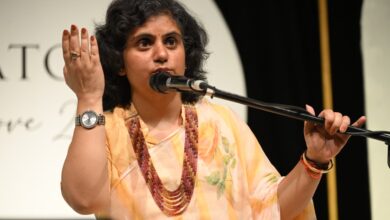
The first day concluded with two mesmerising performances. Kathak dancer Gauri Diwakar and her ensemble from Delhi presented “Hari Ho…Gati Meri”, a work exploring the search for liberation, truth and beauty. This solo production was based on poems by Muslim poets who worshipped and praised Lord Krishna. The choreography was by Guru Aditi Mangaldas.
This was followed by a Bharatanatyam performance titled “Prakashya” by the Spanda Dance Ensemble, choreographed by Padma Shri Leela Samson. The production interpreted poems composed by South Indian vaggeyakaras, reflecting themes of devotion, love, life and nature. Spanda showcased these sentiments through movement, preserving the traditional vocabulary of Bharatanatyam and Kathak while embodying Samson’s innovative yet classical approach.