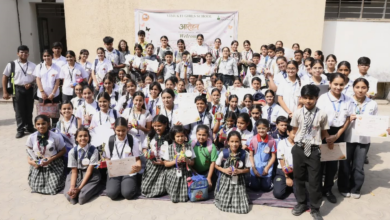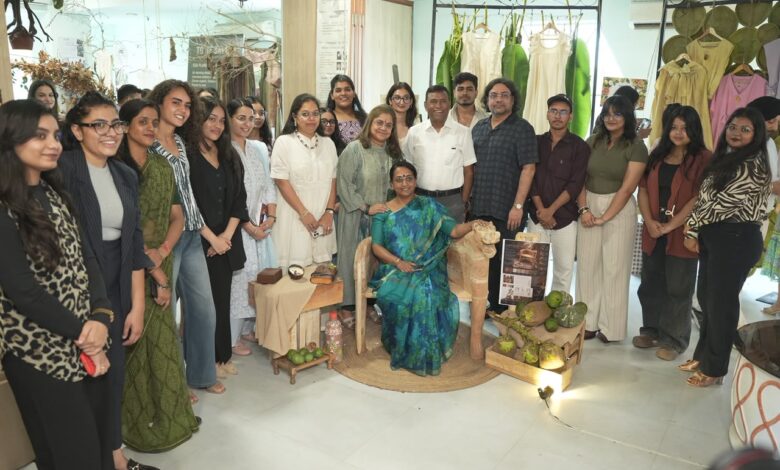
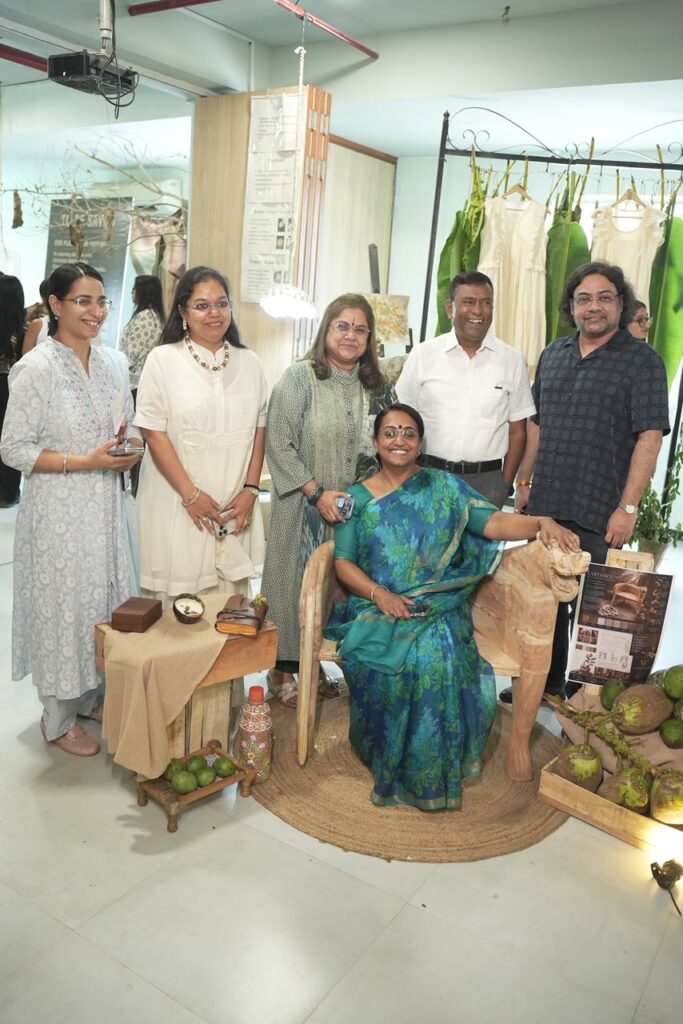
 NIF Global Jaipur, part of Kamla Poddar Institutes, inaugurated its Annual Design Exhibition “मार्मिक (Marmic) – Design Before We Disappear” at the NIF Global Jaipur Campus. The exhibition was inaugurated by Ms. Priyanka Goswami, State Mission Director, Rajeevika (RGAVP), Government of Rajasthan, Shri Dr. Ravi Prakash Meharda, IPS (Retd.), Former Director General of Police, Rajasthan, Dr. Ramnika Kaur, State Project Manager, Rajeevika (RGAVP), Government of Rajasthan, Ar. Anshuman Sharma, Honorary Secretary, Indian Institute of Interior Designers (IIID). along with other eminent dignitaries.
The five-day exhibition, open to visitors from July 22 to 26, 2026, showcases innovative student work centred on sustainability, heritage, natural dyes, organic materials, and responsible consumption.
The theme “Design Before We Disappear” reflected the students’ powerful idea that design must act before it is too late. Through their work, students expressed that the planet does not need saving in a sentimental way; rather, human beings need to rethink their choices before nature, resources, heritage, and future generations are deeply affected. “मार्मिक” became an emotional reminder that responsible design is no longer optional — it is urgent.
This year’s exhibition presented sustainability not just as a concept, but as a hands-on design practice. Students went all out to work with natural, organic and responsible materials, creating garments, products, installations, interior concepts and visual merchandising displays that reflected the relationship between nature, heritage and human choices.
One of the key highlights of the exhibition was the use of natural and organic dyes prepared from ingredients such as mehndi, haldi, jamun, bel, anaar, beetroot, gulab, manjistha and several other plant-based sources. Students also revived the traditional use of ittar, adding natural fragrance to fabrics and creating a subtle multi-sensory design experience.
The exhibition also showcased innovative experiments with materials such as bamboo, banana fibre, cactus and other natural resources, showing how young designers can create meaningful work while reducing dependency on harmful and wasteful materials.
The central idea of the exhibition was brought alive through powerful installations and design pieces that questioned pollution, waste, climate change and irresponsible consumption. A major attraction was the Hourglass installation, where the upper half filled with living plants symbolised hope, growth and the future we still have the opportunity to protect, while the lower half with an excavator, debris and dried branches represented environmental destruction. The installation strongly conveyed the message that time is running out, and meaningful action must begin now.
Through these works, students presented design as more than decoration. Their creations encouraged visitors to rethink how we create, consume and care for the planet. The exhibition explored themes such as regeneration, upcycling, circular design, cultural preservation and the responsibility to give back to nature.
The exhibition also featured the work of Rajeevika Self-Help Groups, providing a platform to showcase their products and craftsmanship. This collaboration highlighted how design education can connect student creativity with community empowerment, traditional skills and sustainable livelihoods.
Chairperson Kamla Poddar, along with Directors Abhishek Poddar and Roma Poddar, appreciated the students for their thoughtful and creative interpretation of the theme. They said that “मार्मिक (Marmic) — Design Before We Disappear” reflected the institute’s commitment to encouraging young designers to think beyond aesthetics and use design as a medium for awareness, responsibility and positive change.
NIF Global Jaipur, part of Kamla Poddar Institutes, has been nurturing creative talent and promoting design education for the past 27 years. Through hands-on learning, industry exposure and experiential education, the institute continues to encourage students to explore design as a powerful medium of creativity, cultural expression, sustainability and social responsibility.