Behaviour – Driven Digital Features and Financial Habits

Abstract
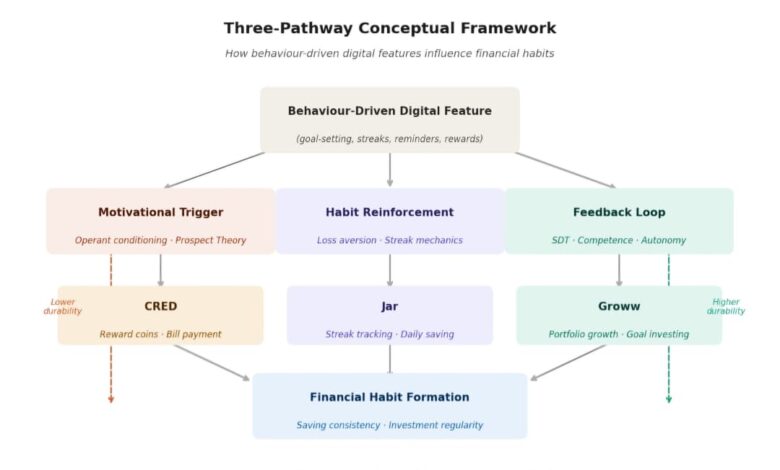
India’s rapid fintech expansion has transformed digital platforms into behaviour-centred ecosystems that actively shape everyday financial decisions. This study examines how behaviour-driven features goal-setting modules, streak tracking, progress indicators, and reward-linked challenges influence users’ saving and investment habits. Using qualitative secondary research and comparative case study methodology, three leading Indian fintech platforms Jar, CRED, and Groww are analysed through a proposed three-pathway conceptual framework: Motivational Triggers, Habit Reinforcement, and Feedback Loops.
Key Findings
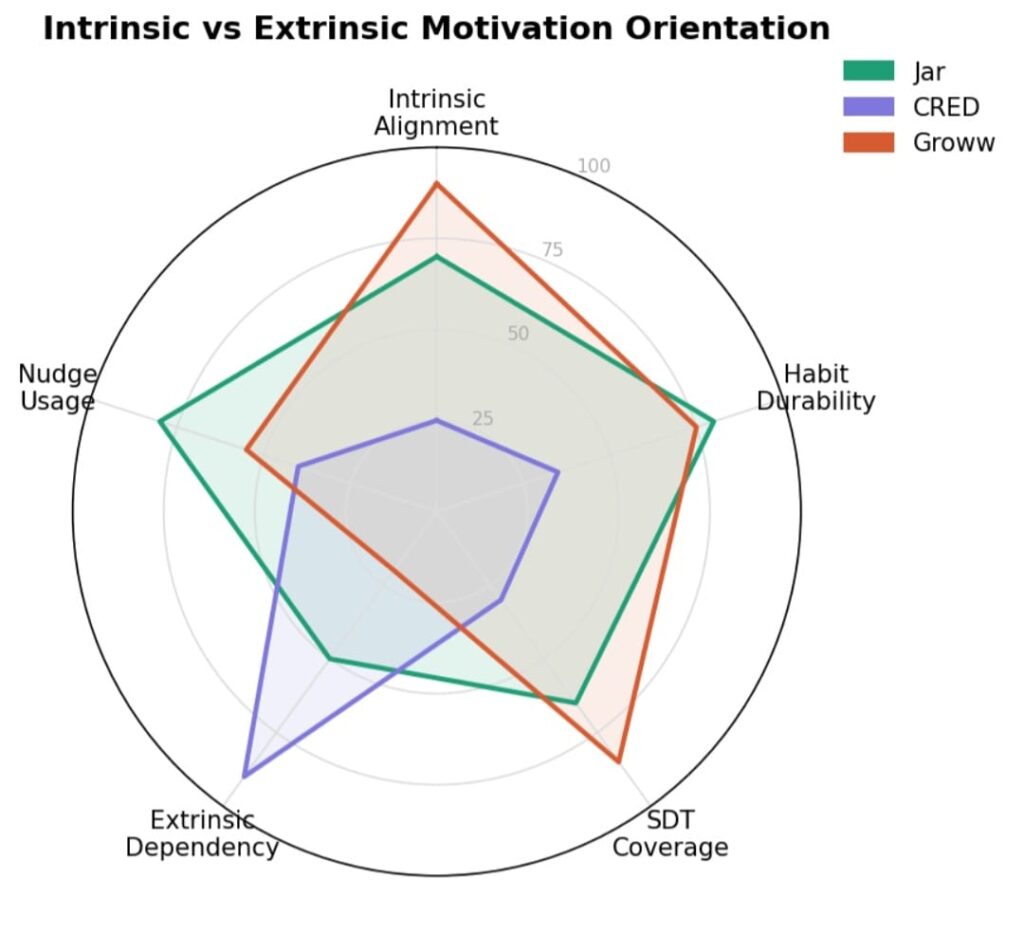
Platforms built primarily around Feedback Loops and intrinsic motivation personalised goals and visible progress are more likely to support durable financial habits than those relying on extrinsic rewards. Jar’s streak-based micro-saving design leverages loss aversion effectively for daily behaviours. CRED’s reward-driven model suits periodic bill payments but is less suited to continuous habit formation. Groww’s feedback-loop approach, combining portfolio visualisation and goal-based investing, aligns closely with Self-Determination Theory’s prediction that intrinsic motivation produces the most durable behaviour change. Critically, design philosophy the dominant conceptual pathway a platform is built around matters more than any individual feature.
Implications
A persistent gap exists between platform engagement metrics and actual financial outcomes the central unresolved challenge for behaviour-driven fintech design. Ethical considerations around transparency, incentive dependency, and equity for India’s diverse user populations are essential, not optional, for platforms operating at scale. Future research should prioritise longitudinal outcome studies and cross-regional comparisons to establish whether behavioural design genuinely improves financial lives over time.
Keywords: Behavioural Design, Digital Finance, Nudge Theory, Self-Determination Theory, Indian Fintech, Financial Habits
Article By :
Karan Raj Singh & Dr. Anup Kumar Srivastav