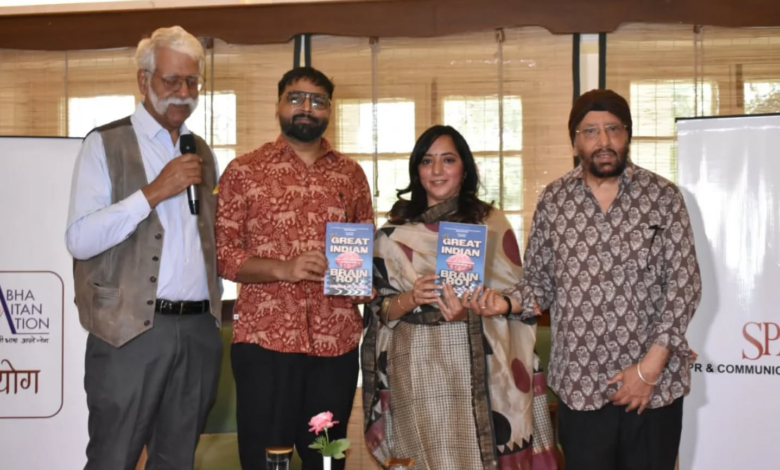
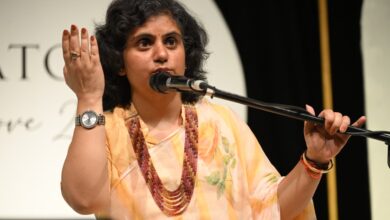
India is the biggest market of fake followers. The reality of today’s contemporary social media world is very different. Influencers have become employees of the metrics and algorithms of social media. Today, every individual is an influencer in some way, because they influence people through one medium or another. These views were expressed by Delhi-based writer, podcaster, and cultural critic, Anurag Minus Verma during a discussion on his book ‘The Great Indian Brain Rot: Love, Lies & Algorithm in Digital India.’ He was in conversation with Jaipur-based Blogger and PR Professional, Tusharika Singh. The event was organised under Prabha Khaitan Foundation’s ‘Sahyog’ initiative on Sunday at Ashok Club.
Speaking about his writing journey, Anurag said that he had started writing during his college days, even before he began podcasting. At that time, he mainly wrote poems and reviews. According to him, writing works like a form of therapy in his life. Speaking about his book ‘The Great Indian Brain Rot’, he said that just as television was once referred to as the “idiot box,” today the tendency of excessively consuming content on social media is being described as “brain rot.” The book discusses several important themes including mental fatigue caused by continuous scrolling, the changing concept of love, caste, misinformation, society, and India’s image in the world.
He further explained that the monetisation of social media has significantly influenced the kind of content produced on these platforms. According to him, because of the revenue model, sensational and conspiracy-related content often receives more visibility as it attracts greater attention and engagement. He also described platforms such as Substack and Medium as useful and effective mediums for sharing ideas and articles with readers.
He further explained that the monetisation of social media has significantly influenced the kind of content produced on these platforms. According to him, because of the revenue model, sensational and conspiracy-related content often receives more visibility as it attracts greater attention and engagement. He also described platforms such as Substack and Medium as useful and effective mediums for sharing ideas and articles with readers.
Speaking on caste, he said that with the rise of social media, a new phenomenon has emerged — the creation of a diverse mythology and folklore around caste identities. This, he said, is increasingly being shaped through digital culture, including music, videos, reels and even rap songs.
The discussion concluded with a Q&A round with the audience. Earlier, the Welcome Address was delivered by Ajay Singha, while the session concluded with a Vote of Thanks by Jagdeep Singh.